

at a Trusted Texas Car Dealership
When your brakes feel soft, you hear a squeal, or the pedal pulses on FM 620, it is time to have them checked. Our brake service in Lakeway TX combines thorough inspections, precision repairs, and high quality parts, backed by experienced technicians who understand Texas Hill Country driving. Whether you drive a compact commuter, family SUV, or a work ready truck, we evaluate pads, rotors, calipers, brake hoses, and ABS sensors the right way. As a full service Texas car dealership, we also help you plan maintenance around your budget with straightforward recommendations. Explore related pages like our used inventory at used-inventory, learn about our shop at our-services, and see local coverage at auto-repair-lakeway-tx. For shoppers comparing used cars in Texas, we keep safety a priority so you can enjoy confident braking on every drive around Lake Travis and beyond.
Our Lakeway brake specialists service all major systems, from fluid exchanges and pad replacements to rotor resurfacing or replacement. We use proven parts that match your driving style, including ceramic and semi metallic options. Explore convenient tools like schedule-service, check timely value on service-specials, and read more about our ASE certified approach at ase-certified-service-lakeway-tx. Your brakes are your most important safety system, and we treat them that way.
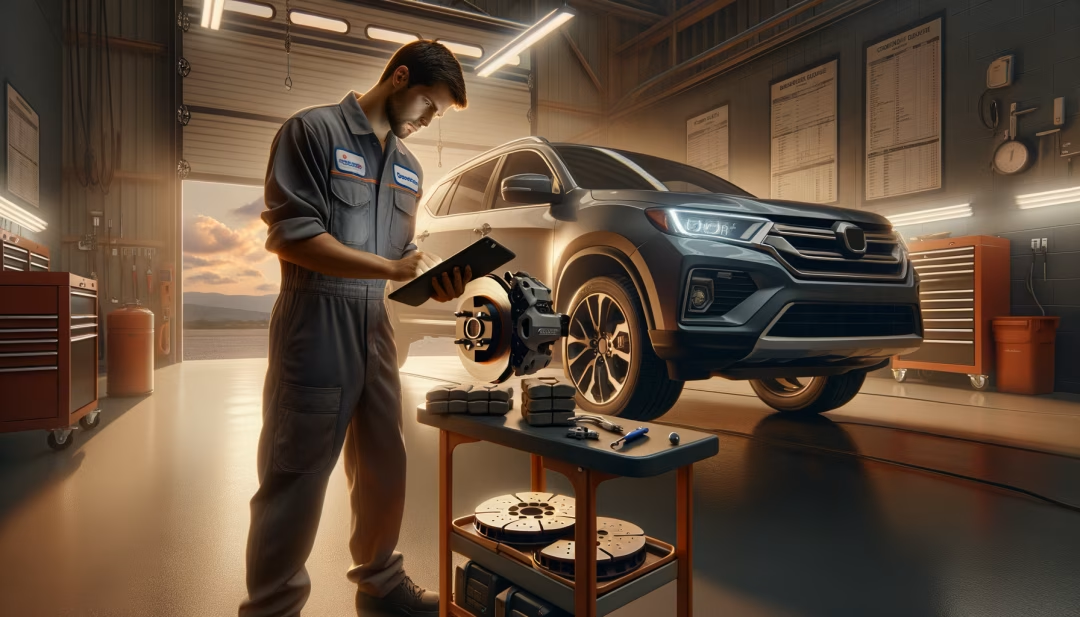
Why timely brake service matters in Lakeway TX
Lakeway driving brings a mix of hill descents, stop and go traffic along Ranch Road 620, and occasional highway bursts toward Austin. Heat, elevation changes, and lake humidity can accelerate wear on pads and rotors while stressing brake fluid. Routine inspections protect stopping distance, reduce vibrations, and prevent costly caliper or rotor damage. If you are also shopping for used cars in Texas or comparing Texas car dealerships, a well maintained brake system supports vehicle value, safety, and the confident feel you expect from a quality vehicle.
- Common warning signs: squeal on application, grinding noise, pedal pulsation, longer stopping distance, or a pulling sensation
- Dashboard alerts: ABS or brake warning indicators should be checked immediately
- Visual cues: low pad thickness, uneven rotor surface, wet or darkened fluid, or rust on brake hardware
What our brake service includes
We tailor service based on measurement and test results, never guesswork. Our team documents pad thickness, rotor condition, caliper operation, hose and line integrity, and brake fluid health. You receive honest findings before any work begins.
- Comprehensive brake inspection and road test
- Brake pad replacement with hardware as needed, bed in procedure included
- Rotor resurfacing or replacement to manufacturer thickness and runout specs
- Caliper service for slides, pins, boots, and piston function, plus brake hose inspection
- Brake fluid test and exchange with proper bleed procedure, including ABS cycling when required
- ABS and stability control diagnostics when warning lights or codes are present
All work is performed by a skilled team that follows best practices. Learn more about our credentials at ase-certified-service-lakeway-tx and see our broader capabilities at our-services.
Pads, rotors, calipers, and fluid explained
Brake pads press against rotors to convert motion into heat. Rotors must be within safe thickness and runout limits to prevent pulsation. Calipers house the pistons that apply pad pressure, and their slides and seals must move freely. Brake fluid transfers pedal force into hydraulic pressure, but it absorbs moisture over time that can lower boiling point and corrode components. Matching parts to your driving pattern around Lakeway helps balance comfort, dust, longevity, and performance.
- Ceramic pads: low dust, quiet, great for daily driving and highway commutes
- Semi metallic pads: strong initial bite and heat tolerance for trucks and towing
- High carbon rotors: improved heat dissipation for hill and highway use
Lakeway conditions and how they affect brakes
Descending the hills near Lake Travis, navigating roundabouts, and frequent stops along busy 620 can heat brakes repeatedly. In summer, underhood temperatures rise, reducing fluid life. If you tow a boat to the lake or carry family gear in an SUV, added weight extends stopping distance and accelerates wear. We factor these realities into our recommendations. That is how we deliver practical solutions while respecting budgets, including those shopping for affordable used cars TX drivers rely on every day.
How often should brakes be serviced
Pad life varies from about 25,000 to over 60,000 miles depending on driving, vehicle weight, and pad material. A quick rule is to inspect brakes with every tire rotation or oil change, or at least twice per year. Brake fluid testing should occur annually, with a fluid exchange typically every two to three years for most vehicles, sooner if towing or in heavy traffic. If you feel vibration, hear squeal, or see a warning light, visit sooner to prevent rotor or caliper damage. Lakeway stop and go traffic can accelerate timelines, so measurements guide the real interval.
Pricing transparency and quality parts
We present options with clear benefits so you can choose what fits your needs. Where possible, we resurface rotors within safe limits to control cost. When replacement is the better choice, we select components that match OEM performance or better. This approach keeps total cost reasonable and aligns with the value expectations of drivers comparing affordable used cars TX families count on. You can review limited time offers on service-specials and explore financing choices for vehicles on get-pre-approved if you are considering an upgrade after service.
Diagnostics for pulsation, pull, and ABS lights
Pulsation during braking usually points to rotor thickness variation or runout. A pull to one side may be a frozen caliper slide, brake hose restriction, or tire issue. ABS or stability control lights can reflect wheel speed sensor faults, tone ring damage, or wiring problems. Our process includes on car measurements, scan tool data, and targeted repairs so you do not replace parts you do not need. If you suspect a related issue, see how we evaluate systems at engine-diagnostics-lakeway-tx.
Safety inspections and multi point checks
Every brake visit includes a broader look at steering, suspension, and tires, because these systems influence braking stability and stopping distance. We also verify brake light operation and brake fluid level after service. For a dedicated state or insurance oriented review, visit vehicle-inspection-lakeway-tx.
Planning your visit and convenient tools
Use our online tools to align service with your schedule and to review available offers. Start at schedule-service and check service-specials for current brake promotions. If you want to see how our full shop supports long term ownership, read our-services and the latest maintenance tips on blog. When it is time for other care, explore oil-change-lakeway-tx and auto-repair-lakeway-tx.
Related services for a safer ride
- oil-change-lakeway-tx to keep engine braking assist responsive
- transmission-service-lakeway-tx for smooth downshifts that support controlled stops
- engine-diagnostics-lakeway-tx to resolve ABS and stability system alerts
- auto-repair-lakeway-tx for complete repair solutions in one place
After service, explore quality vehicles
If you are considering an upgrade after brake repairs, browse used-inventory for a wide selection. You can narrow models by price and features on used-cars-lakeway-tx, estimate vehicle value on value-your-trade-lakeway-tx, and plan next steps at get-pre-approved. For a quick spin, see schedule-test-drive-lakeway-tx. We design every step to be straightforward so you can compare options among Texas car dealerships with confidence.
